Our Latest Higlight
Hiller Research Center
Clinical and Translational Research
The team at the Department of Rheumatology and the Hiller Research Center investigates the molecular and cellular drivers of inflammatory rheumatic diseases. Our work focuses on how mesenchymal tissues respond to chronic inflammation, the biology of fibrosis and fibroblasts, and the cardiovascular and metabolic changes that accompany long-term inflammatory disease—particularly in conditions such as systemic sclerosis, systemic lupus erythematosus, and idiopathic inflammatory myopathies.

Christina Düsing, Andrea-Hermina Györfi, Ayla Nadja Stütz, Laura-Marie Lahu, Franca Sophie Deicher, Yi-Nan Li, Peter-Martin Bruch, Alexandru-Emil Matei, Alexandru Micu, Tim Filla ... Jörg H W Distler
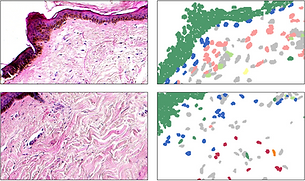
Autoimmune-mediated connective tissue diseases such as antisynthetase syndrome (ASyS) and systemic sclerosis (SSc) have a high unmet medical need. Here we report on treatment under compassionate use with the CD19×CD3 T cell engager (TCE) blinatumomab and the BCMA×CD3 TCE teclistamab in five patients with treatment-refractory ASyS and in five patients with treatment-refractory SSc, respectively. Induction therapy with blinatumomab or teclistamab reduced target cells in affected muscle and skin, respectively, and decreased autoantibody titers. Blinatumomab induced rapid clinical, serological and histological improvement of myositis and stabilization of interstitial lung disease (ILD) in patients with ASyS. Teclistamab improved skin fibrosis, stabilized ILD and resolved tendon friction rubs in patients with SSc. Inhibition of B cell redifferentiation by maintenance therapy with rituximab (RTX) enabled prolonged disease control, even for patients previously unresponsive to RTX. Treatment was associated with adverse events including cytokine release syndrome (CRS) up to grade 3, in two patients with ASyS and in all patients with SSc. No immune effector cell-associated neurotoxicity syndrome (ICANS) occurred. Respiratory infections treated with antibiotics occurred in six patients. Blinatumomab and teclistamab may offer potential as rescue therapies for patients with treatment-refractory ASyS and SSc.
Latest News and Publications